
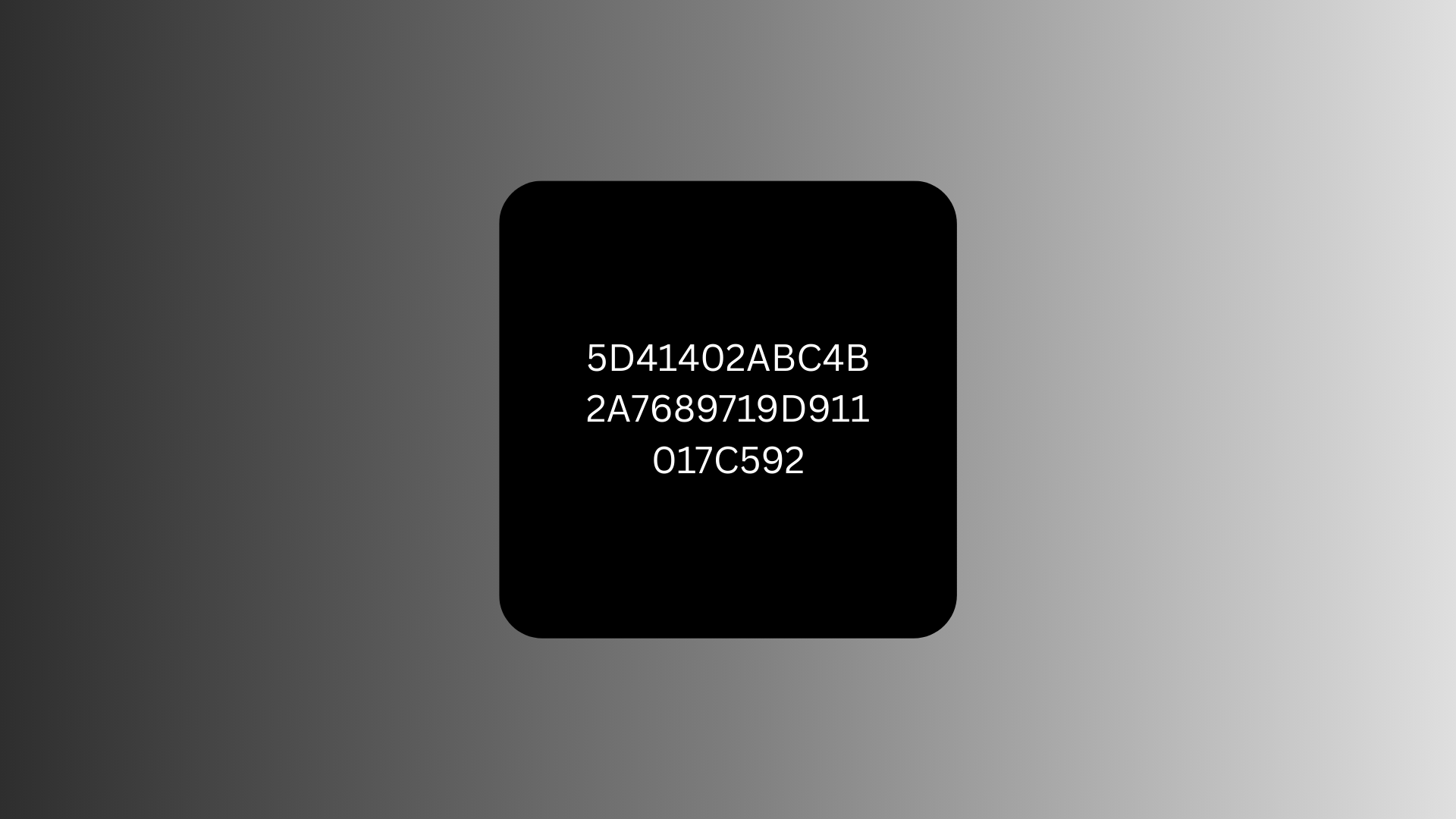
A hash is a value generated from input data using a mathematical process known as a hash function. It produces a fixed-size output, often represented as a string of numbers or letters, regardless of the size of the original input. The main idea behind hashing is that the same input will always produce the same hash, but even the smallest change in the input will lead to a completely different output. This property makes hashes a reliable way of representing data in a compact and unique form.
Hashing plays an important role in computer science, cryptography, and everyday technology. In data structures, hash functions are used in hash tables to quickly locate and retrieve data. In security, they are used to store passwords in a secure way, since the actual password is not saved—only its hash is. They are also widely applied in data integrity checks, where a file or message can be hashed to produce a checksum, which allows users to verify that the data has not been altered. In cryptography, more advanced hash functions such as SHA-256 are used to secure communications, validate transactions in blockchain, and ensure trust in digital systems.
A good hash function needs to be fast, consistent, and resistant to collisions, which occur when two different inputs produce the same output. It should also be irreversible, meaning that one cannot reconstruct the original input from the hash value. Because of these properties, hashing has become an essential tool in modern computing, providing the foundation for security, reliability, and efficiency across many systems and applications.