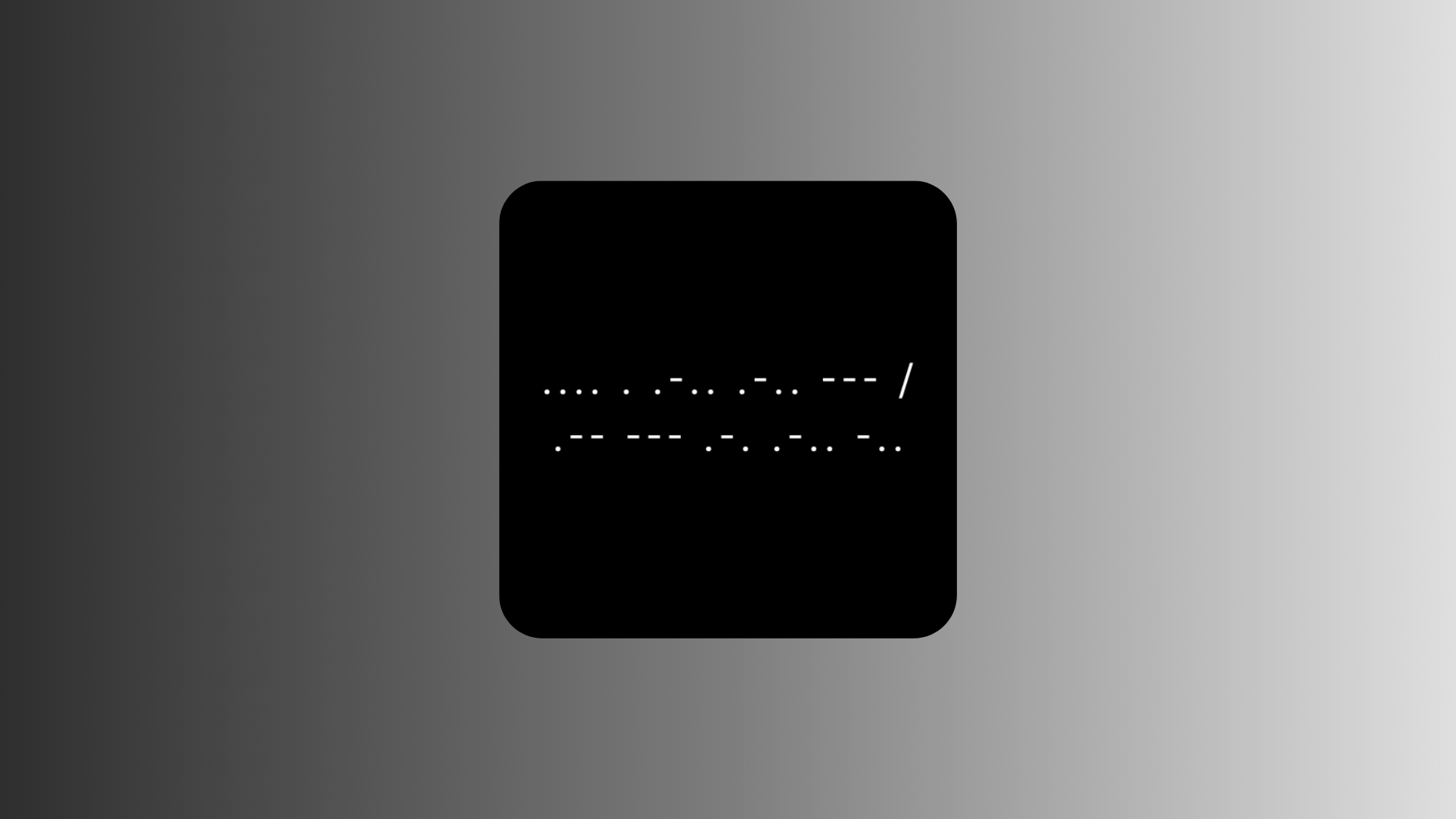
Morse code is a method of communication that represents letters, numbers, and punctuation through sequences of short and long signals, traditionally called dots and dashes. Developed in the early 1830s and 1840s by Samuel Morse and Alfred Vail for use with the electric telegraph, it became one of the first widely adopted digital communication systems. Each character in Morse code is expressed as a unique pattern of signals, which can be transmitted in various forms such as sound, light, electrical pulses, or even written symbols. This versatility made Morse code extremely valuable in long-distance communication before the rise of telephones and digital networks.
The strength of Morse code lies in its simplicity and adaptability. Because it uses only two signal lengths, it can be transmitted through almost any medium, from radio signals and flashing lights to tapping on surfaces. During times of war, especially in World War II, Morse code was heavily used for military communication and naval operations, as it could reliably transmit messages over long distances and poor signal conditions. The standardization of International Morse Code in 1865 further enhanced its global use, replacing earlier regional variations and ensuring consistency across countries and operators.
Beyond its military and telegraphic roots, Morse code played an important role in aviation and maritime communication. For decades, distress signals like SOS, represented as three dots, three dashes, and three dots, were critical for emergency communication and became universally recognized as a call for help. Amateur radio operators also adopted Morse code, valuing its efficiency in low-bandwidth transmissions and its ability to cut through noise more effectively than voice communication.
Although Morse code has largely been replaced by modern digital communication technologies, it still holds cultural, educational, and symbolic significance. It is sometimes used for emergency signaling when no other form of communication is possible, such as blinking signals with a flashlight or tapping patterns to convey messages. It is also taught as part of amateur radio licensing in some countries and remains a fascinating historical example of how humans adapted technology to extend communication across the globe. Today, Morse code represents both a milestone in the history of communication and a reminder of the ingenuity required to build global connectivity from simple binary-like signals.